

The Saskatchewan Green Party opposes the Saskatchewan and Alberta governments' request that the federal ban on the use of strychnine be lifted. A return to using this toxic chemical to control gopher populations harms other wildlife and the environment. It’s not limited to the Richardson Ground Squirrels. The risk to burrowing owls and the swift fox, which are not targets of the strychnine but species likely to be harmed, is much too high.
Richardson Ground Squirrels loosen soil, and this aeration allows it to soak up more moisture for plants to grow, which is actually a benefit to farmers.
Instead of demanding the federal government reinstate the use of strychnine to poison gophers, Saskatchewan and Alberta should encourage natural predators of the Richardson Ground Squirrel. That is a more natural way to reinstate balance in the ecosystem.
Wolves, foxes, weasels, snakes, badgers, coyotes, cougars and bears are just some of the natural predators of gophers. These predators also die from the strychnine; these things do move up the ecosystem, and then more and more of the poison is needed to control the gophers as predator loss escalates.
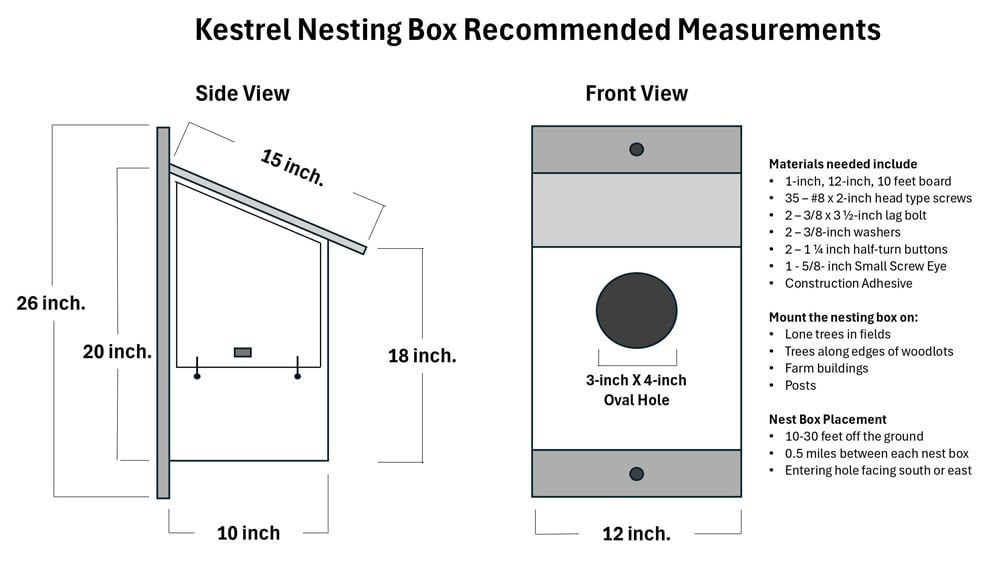
Raptor platforms and nesting boxes can be added to farmers' fields to encourage predator birds.
The Alberta and Saskatchewan governments also continue to lag far behind on meaningful measures to combat climate change. Drought is a major factor in ballooning ground squirrel populations.
This is a quote from February 17, 2026, on Scott Moe’s Facebook page: “Premier Danielle Smith and I wrote to Prime Minister Carney to request a three-year exemption for the use of strychnine.
Producers need regulatory systems that consider economic impacts in a science and evidence-based manner.”
Link to their letter to PM Carney [Page 1] [Page 2]
Here are more important reasons to oppose the use of this chemical: Strychnine is a highly toxic, bitter alkaloid used primarily as a rodenticide and avicide, which poses severe risks to aquatic environments if it enters waterways. Although it is generally applied below ground in baits, spills, or improper use can contaminate water, which leads to acute toxicity for birds, fish, and other aquatic organisms
- Aquatic Toxicity: Strychnine is classified as very toxic to aquatic life, with 96-hour LC50 values (concentration killing 50% of the population) for some fish being less than 1 mg/L.
- Fish and Bird Poisoning: One documented case includes 4,000 fish deaths in a 3-acre reservoir following a deliberate dumping incident and poisoning of aquatic birds (mallards and gulls) due to ingestion of treated grain near a pond.
- Persistence: Under abiotic conditions, strychnine is relatively stable and does not readily hydrolyze at pH 5-9. However, in soil, it is degraded by microbes, with about 90% dissipating in 33–40 days.
- Secondary Exposure: Predators and scavengers feeding on animals poisoned by strychnine near water can also be killed.
In conclusion, the solution to problems like these is a restored natural balance. This powerful neurotoxin needs to stay out of our environment. The federal strychnine ban must not be revoked.
Naomi Hunter
Saskatchewan Green Party Leader and Farmer
Showing 1 reaction